
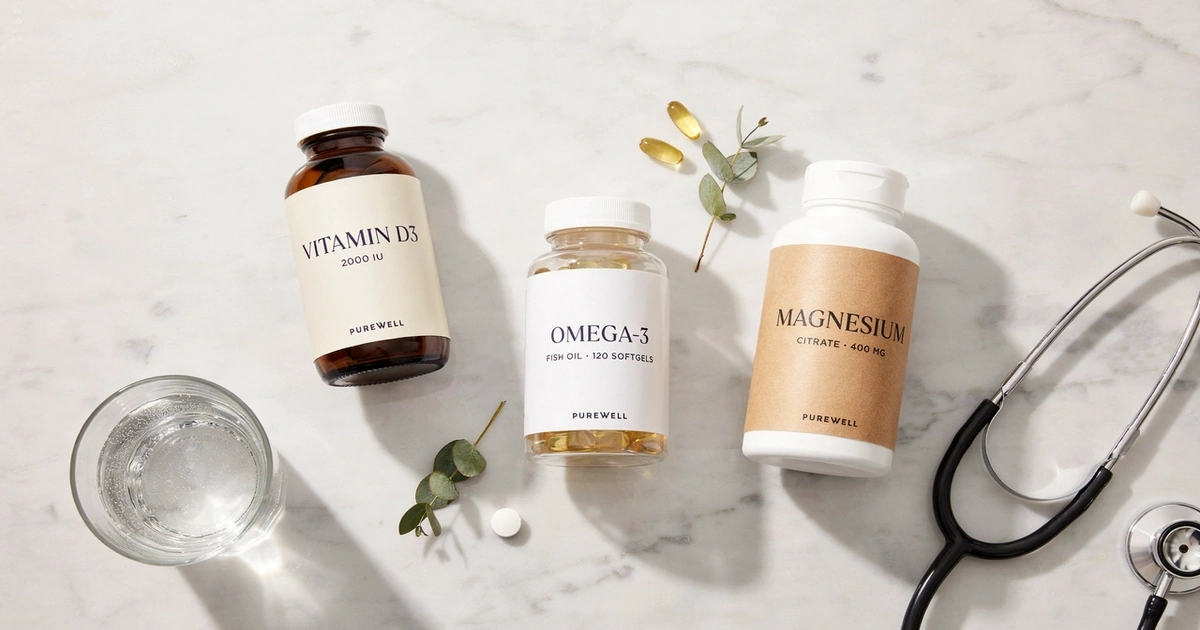
Foundation Guide
Vitamins & Supplements
Dietary supplements are vitamins, minerals, herbs, and amino acids designed to fill nutritional gaps — not replace meals or treat disease. Some, like vitamin D, omega-3s, folic acid, and vitamin B12, have strong scientific backing for specific groups. Real risks exist, including drug interactions and toxicity at high doses. Always choose third-party certified brands (NSF, USP, or Informed Sport) and consult your doctor before starting any supplement.
- Americans spent over $50 billion on dietary supplements in 2023 (CRN Consumer Survey), yet most healthy adults eating varied diets do not need routine supplementation.
- The FDA does NOT pre-approve supplements before sale — under DSHEA 1994, manufacturers bear responsibility for safety; the FDA only intervenes after reported harm.
- A 2023 analysis found 14%–50% of sports supplement samples tested positive for undisclosed substances, and 20% of weight-loss and immune supplements made illegal disease claims.
- The REDUCE-IT trial found high-dose EPA omega-3s reduced major cardiovascular events by 25% in high-risk patients on statins (NEJM, 2018).
- Key certifications to look for: NSF International, USP Verified, Informed Sport, and ConsumerLab — these independently verify ingredient identity, potency, and purity.
- Men over 40 may benefit most from: vitamin D3 (1,000–2,000 IU), omega-3s (500mg+ EPA+DHA combined), magnesium glycinate (evening), CoQ10, zinc, and vitamin B12.
Walk down the supplements aisle at any grocery store and you’ll see hundreds of bottles promising everything from better sleep to a stronger immune system. Americans spent over $50 billion on dietary supplements in 2023 — and that number keeps climbing. But here’s the truth most labels won’t tell you: not all supplements are safe, and many aren’t proven to do what they claim.
So how do you separate the genuinely helpful from the overhyped — and the safe from the dangerous? This guide answers exactly that. You’ll get a clear breakdown of what dietary supplements actually are, which ones have real science behind them, what the risks look like in practice, and a step-by-step framework for choosing products you can actually trust in 2026.
What Are Dietary Supplements?
Dietary supplements are products designed to add nutrients to your diet that you may not be getting enough of from food alone. They include vitamins, minerals, herbs, amino acids, probiotics, and enzymes — available in pills, capsules, powders, gummies, and liquids. Supplements are not intended to replace a balanced diet or treat disease; they’re meant to fill nutritional gaps. For a deeper overview of how these products work and who they’re designed for, see our complete beginner’s guide to dietary supplements.
That definition comes straight from federal law. The Dietary Supplement Health and Education Act (DSHEA) of 1994 defines dietary supplements as a distinct category — separate from food and separate from drugs. This distinction matters enormously for safety, as you’ll see below.
Types of Dietary Supplements
The supplement category is broader than most people realize. Here’s a breakdown of the main types:
- Vitamins — Fat-soluble (A, D, E, K) and water-soluble (B-complex, C). Among the most widely used.
- Minerals — Calcium, magnesium, iron, zinc, and potassium, among others.
- Herbal & botanical supplements — Echinacea, ginkgo biloba, turmeric, ashwagandha, and thousands more derived from plants. One popular example is saw palmetto, widely used for prostate health.
- Amino acids & protein supplements — Creatine, BCAAs, collagen, whey protein.
- Probiotics & prebiotics — Live beneficial bacteria and the fiber that feeds them.
- Specialty supplements — Omega-3 fatty acids, CoQ10, melatonin, NMN, berberine, and others that don’t fit neatly into other categories.
- Sports & performance supplements — Pre-workouts, protein powders, energy boosters.
How Are Supplements Regulated in the U.S.?
The FDA does NOT approve supplements before they are sold. A 2023 analysis found that 14%–50% of sports supplement samples tested positive for undisclosed substances not listed on the label — including anabolic agents. A separate government review found that 20% of weight-loss and immune-support supplements made outright illegal disease claims. Read our full breakdown: Are Natural Supplements FDA Approved? What Men Must Know.
Under DSHEA, manufacturers are responsible for ensuring their products are safe before marketing them. The FDA only steps in after a product is already on the market — and only if it receives reports of harm or finds evidence of illegal claims. This regulatory gap means you can’t assume a product on a store shelf has been vetted for purity, potency, or accuracy. Knowing this is the first step to shopping smarter.
Proven Benefits of Dietary Supplements
When used appropriately, specific dietary supplements do have meaningful, evidence-backed benefits. The key word is specific — not all supplements, and not for all people. According to the NIH Office of Dietary Supplements, some supplements have particularly strong scientific support:
| Supplement | Primary Benefit | Who Benefits Most | Evidence Level |
|---|---|---|---|
| Calcium & Vitamin D | Maintains bone density; reduces bone loss | Older adults; postmenopausal women | Strong |
| Folic Acid | Reduces risk of neural tube birth defects | Women of childbearing age | Strong |
| Omega-3 Fatty Acids (EPA/DHA) | Reduces cardiovascular events; supports brain health | High-risk cardiac patients; adults 40+ | Strong |
| Vitamin B12 | Nerve function, energy, cognitive support | Vegans, vegetarians, adults over 50 | Strong |
| Iron | Red blood cell production | Iron-deficiency anemia; pregnancy | Strong |
| AREDS2 Formula | Slows progression of age-related macular degeneration | Moderate-to-advanced AMD | Strong |
| Probiotics | Gut microbiome support; post-antibiotic recovery | IBS sufferers; after antibiotic use | Moderate |
| Magnesium | Muscle function, sleep quality, energy | Active adults; dietary magnesium deficiency | Moderate |
Supplements are most beneficial when they address a confirmed deficiency. Before starting any supplement routine, ask your doctor for relevant blood work — vitamin D, B12, iron, and magnesium levels are all easily tested.
Real Risks and Side Effects You Need to Know
Supplements feel safe because they’re sold without a prescription and often labeled “natural.” But natural doesn’t mean harmless — and that’s one of the most dangerous misconceptions in the supplement world.
Drug Interactions to Watch Out For
Yes, supplements can interact with medications — and some interactions are serious enough to reduce drug effectiveness or cause organ damage. The NIH’s National Center for Complementary and Integrative Health (NCCIH) documents several well-established interaction risks:
- Vitamin K — Reduces the effectiveness of the blood thinner warfarin, potentially increasing clotting risk.
- St. John’s Wort — Speeds up breakdown of antidepressants, birth control pills, heart medications, anti-HIV drugs, and transplant immunosuppressants.
- Antioxidants (vitamins C & E) — May interfere with the effectiveness of certain chemotherapy drugs.
- Ginseng — When combined with certain medications, associated with hepatotoxic (liver damage) effects.
- Curcumin (turmeric’s active compound) — Linked to liver injury even without drug combinations.
- Fish oil at high doses — Can increase bleeding risk, especially combined with blood thinners.
If you take any prescription medications, this is not an area to guess about. Always tell your doctor and pharmacist about every supplement you take — including herbals and botanicals — before starting anything new.
When More Is Not Better: Toxicity Risks
With water-soluble vitamins like vitamin C, your body flushes excess amounts. But with fat-soluble vitamins — A, D, E, and K — excess accumulates in your body’s tissues and can reach toxic levels over time.
- Excess vitamin A — Severe headaches, liver damage, reduced bone density, and birth defects at very high doses
- Excess iron — Nausea, vomiting, and potential liver and organ damage (especially dangerous in children)
- High-dose zinc — May suppress immune function and interfere with copper absorption over time
- Excessive selenium — Hair loss, nerve damage, and gastrointestinal problems
- Very high vitamin D — Hypercalcemia (too much calcium in the blood), causing nausea, weakness, and kidney problems
Groups That Face Higher Risks
- Pregnant or breastfeeding women — Many supplements haven’t been tested for safety during pregnancy
- Children and teens — Dosing is different; many adult supplements can harm young bodies
- People with kidney, liver, or heart conditions — Impaired organ function changes how supplements are processed
- Anyone scheduled for surgery — Certain supplements increase bleeding risk and affect anesthesia; always disclose all supplements to your surgical team
Seek immediate medical attention if you experience severe nausea, vomiting, confusion, heart palpitations, or jaundice after starting a new supplement. These may signal a serious reaction or toxicity event.
How to Read a Supplement Label
One of the most practical skills you can develop as a supplement consumer is knowing how to read what’s actually on the label. For a complete deep dive, see our dedicated guide: How to Read a Supplement Label: What Men Need to Know. Here’s a quick overview of what to look for:
Serving Size
The dose on which all listed amounts are based. Taking more than one serving means multiplying all amounts — which can quickly exceed safe limits for fat-soluble vitamins and minerals.
% Daily Value (%DV)
Shows how much of the recommended daily intake one serving provides. Over 100% DV isn’t always better — for iron or vitamin A, it can be dangerous. Use %DV as a relative guide, not a target to maximize.
Ingredient List
Everything in the product — including fillers, binders, and additives. If you have allergies or sensitivities, check this carefully. Be wary of proprietary blends that don’t disclose individual ingredient amounts.
“Other Ingredients” Section
Non-active ingredients: coloring agents, preservatives, gelatin capsule material. People with dietary restrictions (vegan, halal, kosher) should always check this line carefully.
Health Claims vs. Structure/Function Claims
By law, supplement labels cannot claim to “treat, cure, diagnose, or prevent” any disease — those are drug claims. What they can say:
- Health claims (FDA-authorized): “Calcium may reduce the risk of osteoporosis.” These must be backed by scientific evidence and are pre-authorized by the FDA.
- Structure/function claims (not pre-approved): “Supports immune function,” “promotes joint health.” These require an FDA disclaimer on the label but are not reviewed before use.
If a supplement label says it cures or treats a specific disease, that’s a red flag — and potentially illegal under federal law. Report suspicious claims to the FDA’s MedWatch program. You can also learn more about what the FDA can and cannot regulate in our article: Are Natural Supplements FDA Approved?
How to Choose Safe, High-Quality Dietary Supplements
Given that the FDA doesn’t pre-approve supplements, how do you find products you can actually trust? The answer is third-party testing — and knowing which red flags to avoid.
Look for Third-Party Certification
Third-party certification means an independent organization has tested the product to verify that it contains what the label says, in the stated amount, without undisclosed contaminants or banned substances. The four most respected certifications are:
| Certification | Organization | What It Verifies | Best For |
|---|---|---|---|
| 🏅 NSF Certified for Sport | NSF International | Identity, potency, purity; banned substance testing | Athletes; general consumers wanting rigorous testing |
| 🔬 USP Verified | United States Pharmacopeia | Identity, potency, purity of ingredients | All consumers; especially for vitamins and minerals |
| ✅ Informed Sport | LGC Group | All WADA-prohibited substance testing | Competitive athletes; sports nutrition |
| 🧪 ConsumerLab | ConsumerLab.com | Publishes test results; flags products that fail | Research-focused consumers; product comparison |
Red Flags to Avoid When Buying Supplements
Common Supplements at a Glance
| Supplement | Primary Benefit | Who Needs It | Risk Level | Certification? |
|---|---|---|---|---|
| Vitamin D | Bone health, immune support | Adults with low sun exposure; over 50 | Low–Medium | Recommended |
| Omega-3 (Fish Oil) | Heart and brain health | People who don’t eat oily fish regularly | Low | Recommended |
| Magnesium | Muscle function, sleep, energy | Active adults; poor dietary intake | Low | Recommended |
| Probiotics | Gut health, immune support | After antibiotics; IBS sufferers | Low | Recommended |
| Vitamin B12 | Nerve function, energy | Vegans, vegetarians, adults over 50 | Very Low | Optional |
| Iron | Red blood cell production | Diagnosed iron-deficiency anemia only | High — doctor only | Yes — essential |
When Is the Best Time to Take Supplements?
Timing depends on the supplement. Some are best taken with food for better absorption; others work better on an empty stomach or at a specific time of day. Getting the timing right can improve how well a supplement works and reduce side effects.
| Supplement | Best Time to Take | Why |
|---|---|---|
| Vitamin D | With your largest meal (contains fat) | Fat-soluble — absorption improves significantly with dietary fat |
| Omega-3 / Fish Oil | With a fat-containing meal | Reduces fishy aftertaste; improves absorption |
| Magnesium Glycinate | Evening, 30–60 min before bed | Supports muscle relaxation and sleep quality |
| Vitamin B12 | Morning, on an empty stomach | May boost morning energy; water-soluble so no food needed |
| Probiotics | 30 min before a meal or with breakfast | Lower stomach acid before eating helps bacteria survive transit |
| Iron | Empty stomach with vitamin C | Vitamin C boosts absorption; avoid calcium or coffee at the same time |
| Multivitamin | With food (morning or lunch) | Reduces nausea; food aids absorption of fat-soluble vitamins |
| Creatine | Anytime — consistency matters most | Post-workout timing may offer a slight edge, but daily use is the key factor |
Some supplement combinations work well together — vitamin D and magnesium are complementary, for example. Others compete: calcium can block iron absorption if taken at the same time. When combining supplements, space them out when possible and check with your doctor or pharmacist for interactions.
Who Actually Needs Dietary Supplements?
Most healthy adults who eat a varied, balanced diet don’t need most supplements. The evidence for routine multivitamin use in otherwise healthy people is notably weak — multiple large studies published in the Annals of Internal Medicine found that multivitamins do not meaningfully reduce the risk of cancer, heart disease, or cognitive decline in healthy adults.
But “most people don’t need most supplements” is different from “no one needs any supplements.” Here’s a more nuanced look:
Strong Need
Folic acid and iron are evidence-backed and often essential. Most OB-GYNs recommend prenatal vitamins throughout pregnancy and while breastfeeding.
Strong Need
B12 absorption declines with age; vitamin D is often clinically indicated. Blood work is the best way to confirm actual need before supplementing. Men over 50 may also benefit from reading our guide on natural supplements for prostate health.
Strong Need
Vitamin B12 is found almost exclusively in animal products. Vegans also commonly need vitamin D, omega-3s (algae-based), iron, calcium, and zinc.
Strong Need
Confirmed by blood work — conditions like iron-deficiency anemia, vitamin D deficiency, or hypomagnesemia are the clearest use cases for supplementation.
Usually Not Needed
Healthy adults eating varied meals with no confirmed deficiencies generally don’t need routine supplementation. Food sources deliver nutrients alongside fiber and phytonutrients supplements can’t replicate. See our nutrition guides for food-first strategies.
Let your blood work and your doctor guide your supplement decisions — not the vitamin aisle end-cap display. Food sources deliver nutrients alongside fiber, phytonutrients, and other compounds that supplements simply cannot replicate.
Supplements Specifically for Men Over 40
As men age past 40, several physiological shifts make targeted supplementation more relevant — including declining testosterone, reduced cardiovascular resilience, lower energy levels, and decreased nutrient absorption. If you’re also struggling with unexplained weight gain in this age range, our article on why you can’t lose weight after 40 covers the mitochondrial and metabolic factors at play. Here are the supplements with the strongest evidence for men over 40:
| Supplement | Why Men Over 40 May Benefit | Suggested Form | Evidence |
|---|---|---|---|
| ☀️ Vitamin D3 | Supports testosterone production, bone density, immune function, and mood. Men over 40 are frequently deficient — especially those who work indoors. | D3 (cholecalciferol), 1,000–2,000 IU with fat-containing meal | Strong |
| ❤️ Omega-3 (EPA + DHA) | Cardiovascular risk rises with age. Omega-3s may support heart health, reduce inflammation, and support brain function. Nitric oxide production — key for blood flow — also benefits from anti-inflammatory support. | 500mg+ EPA+DHA combined; triglyceride form preferred; IFOS or NSF certified | Strong |
| ⚡ Magnesium | Most men over 40 don’t get enough magnesium from diet. May support energy, sleep quality, blood pressure, and muscle recovery. | Magnesium glycinate or citrate (better absorbed than oxide), evening | Moderate |
| 🔋 CoQ10 | Natural CoQ10 levels drop with age — and drop further with statin use. May support mitochondrial energy production and heart muscle function. | Ubiquinol form (more bioavailable after 40), 100–200mg daily | Moderate |
| 💊 Zinc | May support testosterone synthesis, immune defense, and prostate health. Absorption can decrease with age. | Zinc gluconate or citrate, 8–11mg daily (avoid exceeding 40mg) | Moderate |
| ⚗️ Vitamin B12 | Stomach acid needed to absorb B12 declines after 50. Deficiency causes fatigue, brain fog, and nerve issues — often mistaken for normal aging. | Methylcobalamin form; sublingual may improve absorption in older adults | Strong |
Men over 40 should also pay attention to prostate health. Certain supplements like zinc and saw palmetto have been studied specifically in this context. See our dedicated guides: 5 Best Natural Supplements for Prostate Health, Saw Palmetto for Prostate: Does It Really Work?, and our Prostate Health Diet guide. If you’re experiencing urinary symptoms, our overview of BPH (enlarged prostate) may also be helpful.
Before starting any of the above, ask your doctor for a baseline panel: 25-OH vitamin D, B12, complete blood count with iron studies, and a lipid panel. This gives you an evidence-based starting point rather than guessing at what to take.
Common Supplement Myths Debunked
Misinformation about supplements is widespread. Here are the most dangerous myths — and what the evidence actually says:
Myth 1: “Natural means safe.”
Some of the most toxic substances in the world are entirely natural. Comfrey causes serious liver damage. Aristolochia causes kidney failure. “Natural” tells you nothing about safety — evaluate each ingredient individually based on the available clinical evidence. Our article on whether natural supplements are FDA approved covers exactly how this regulatory gap puts consumers at risk.
Myth 2: “It’s been used for hundreds of years, so it must work.”
Traditional use does not equal proven safety or efficacy. Long-term use sometimes reveals risks invisible over shorter time periods. Randomized controlled trials are the gold standard — not historical anecdote. A clear example: saw palmetto has centuries of traditional use, yet modern clinical trials show mixed results.
Myth 3: “More is better.”
With fat-soluble vitamins and minerals, excess builds up in your body and causes harm. Exceeding recommended amounts doesn’t produce better results — it produces toxicity. Always follow the label dose unless your doctor advises otherwise.
Myth 4: “I can take supplements instead of my medications.”
This is one of the most dangerous supplement behaviors. People who replace prescribed medications with supplements expose themselves to serious, sometimes life-threatening, health risks. Supplements and medications serve different regulatory and clinical roles.
Myth 5: “Supplements don’t interact with medications.”
They absolutely can — and in some cases the interactions are severe. St. John’s Wort alone is documented to interact with dozens of commonly prescribed drugs, including antidepressants, birth control, and anti-rejection medications. The NCCIH maintains a full database of known drug-supplement interactions worth bookmarking.
Our Top Recommended Supplements for 2026
Based on scientific evidence, third-party testing standards, and real-world user experience, here are the supplement categories worth considering in 2026 — for people who have identified a genuine need with their healthcare provider.
☀️ Best Vitamin D Supplement
Look for D3 (cholecalciferol), not D2 — it’s more bioavailable and better studied. Opt for USP or NSF verified brands in the 1,000–2,000 IU range unless your doctor recommends a higher therapeutic dose based on blood work.
🐟 Best Omega-3 (Fish Oil) Supplement
Choose products with combined EPA + DHA of at least 500mg per serving, in triglyceride form (more absorbable than ethyl ester). Look for IFOS or NSF certification to confirm purity and absence of heavy metals and PCBs.
💊 Best Magnesium Supplement
Magnesium glycinate or citrate are better absorbed than magnesium oxide. Particularly useful for adults with sleep difficulties, muscle cramps, high stress, or confirmed low dietary magnesium intake. Browse our full sleep and recovery category for more on how magnesium supports rest.
🦠 Best Probiotic Supplement
Look for clinically studied strains (Lactobacillus acidophilus, Bifidobacterium longum), CFU counts in the billions, and guaranteed-at-expiration potency. Refrigerated formulas are often more viable, especially for sensitive strains.
Always confirm your specific supplement needs with your healthcare provider before purchasing any products. Blood work is the most reliable way to identify actual deficiencies.
Dietary supplements occupy a complicated space in American health culture. Some are genuinely valuable tools — backed by strong evidence, filling real nutritional gaps, and benefiting specific populations who truly need them. Others are expensive placebos at best, and potentially dangerous at worst. Your health is worth more than a well-designed label. Use evidence — not marketing claims — as your guide.
Key Takeaways
- Supplements are not regulated by the FDA before sale — quality and safety vary enormously
- Vitamin D, folic acid, B12, and omega-3s have solid scientific backing for specific groups
- Drug interactions and toxicity risks are real and can be serious — always disclose supplements to your doctor
- Third-party certifications (NSF, USP, Informed Sport) are your best consumer protection
- “Natural” does not mean safe — evaluate every supplement on its own clinical evidence
- Men over 40 may benefit most from vitamin D3, omega-3s, magnesium, CoQ10, and zinc — see our full male vitality guide
- The best starting point is always a conversation with your doctor and relevant blood work before starting any new supplement
Before starting any new supplement, please consult with your healthcare provider — especially if you have an existing health condition, take prescription medications, or are pregnant or breastfeeding. This guide is for informational purposes only and does not substitute for personalized medical advice. Read our full medical disclaimer and editorial policy.
References & Sources
- Council for Responsible Nutrition (CRN). “2023 CRN Consumer Survey on Dietary Supplements.” crnusa.org, 2023.
- U.S. Food & Drug Administration. “FDA 101: Dietary Supplements.” fda.gov. Updated 2023.
- Cohen PA, et al. “Presence of Prohibited Substances in Dietary Supplements.” JAMA Internal Medicine / NCBI PMC, 2022. PMC9038516.
- Bhatt DL, et al. “Cardiovascular Risk Reduction with Icosapentaenoic Acid for Hypertriglyceridemia” (REDUCE-IT Trial). New England Journal of Medicine, 2018. DOI: 10.1056/NEJMoa1812792.
- Lauer MS, et al. “Enough Is Enough: Stop Wasting Money on Vitamin and Mineral Supplements.” Annals of Internal Medicine, 2013. Vol. 159(12).
- National Center for Complementary and Integrative Health (NCCIH). “Using Dietary Supplements Wisely.” nccih.nih.gov. Updated 2023.
- NIH Office of Dietary Supplements. “Dietary Supplements: What You Need to Know.” ods.od.nih.gov. Updated 2023.
Frequently Asked Questions
What are dietary supplements and what do they do?
Are dietary supplements safe to take every day?
Does the FDA approve dietary supplements before they’re sold?
How do I know if a supplement is high quality?
Can supplements interact with my medications?
What supplements should men over 40 consider?
Who actually needs to take dietary supplements?
What’s the best way to start taking supplements safely?

Shamim Sarker is the Founder and Lead Health Reviewer at ShamimGuide.com — an independent platform dedicated to evidence-based supplement and health product reviews. With over 8 years of personal research experience in natural health and wellness, he brings a rigorous, science-first approach to every review published on this site.
His areas of focus include men’s health, weight loss, vitamins & supplements, oral health, and skin care. Every product featured on ShamimGuide is evaluated using a strict 4-step research methodology — ingredient analysis, clinical evidence review, user feedback evaluation, and an unbiased final verdict — so readers can make confident, informed decisions without the confusion.
Disclaimer: Content on ShamimGuide is for informational purposes only and does not constitute medical advice. Some articles contain affiliate links — commissions never influence editorial ratings or recommendations.